The Best Gadgets for Sleep in 2026: Sleep Aid Devices That Actually Help
When you buy through links on this page, I may earn a small commission from Amazon or other shops. It costs you nothing extra. How this works.
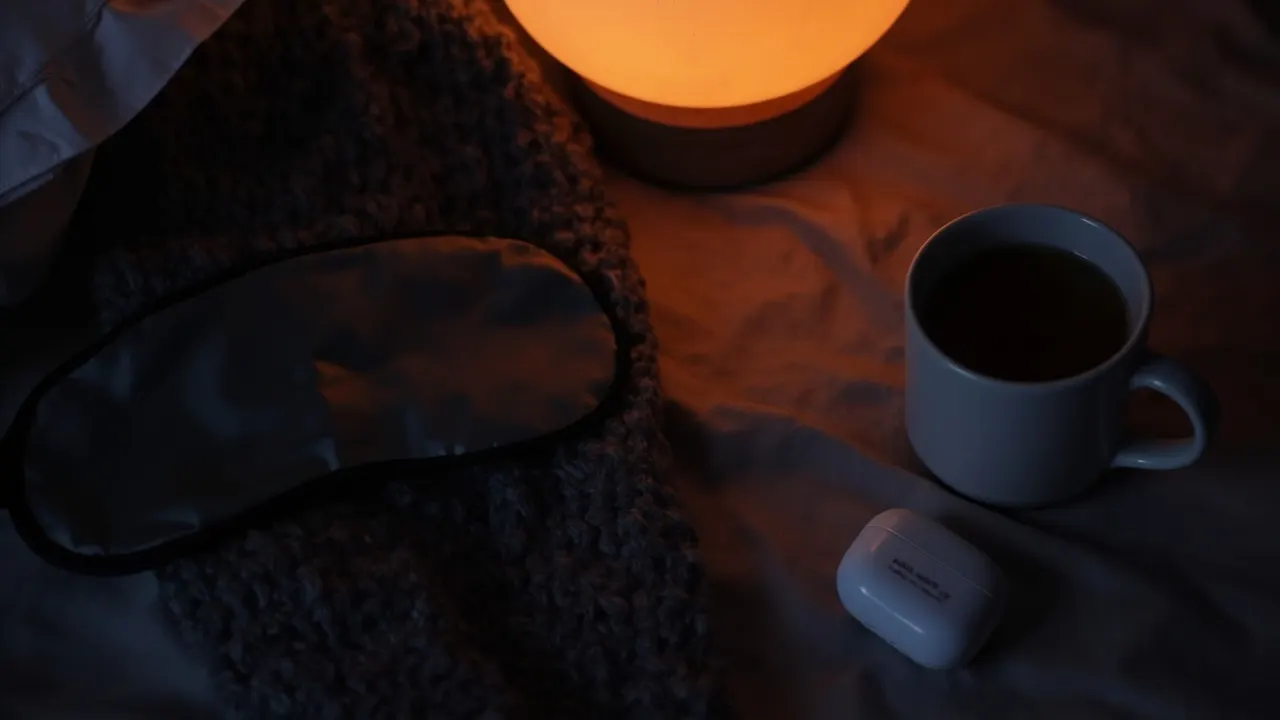
For some people, falling asleep is the hardest thing they do all day. You’re exhausted, you lie down, and your brain decides it’s the perfect moment to replay something awkward you said in 2011. Sure, you could take a cocktail of sleep supplements, but there are plenty of gadgets for sleep that work with your body instead: they block noise, slow down your breathing or wake you up with light instead of a screaming alarm.
We’ve kept this list of sleeping devices up to date since 2019. For 2026, we removed products that are discontinued or no longer sold, added the sleep earbuds that reviewers rate highest right now, and kept the old favorites that still hold up. Where I’ve used something myself, I say so. Everything else is researched from maker pages and hands-on reviews.
Quick picks:
- Best sleep earbuds: Soundcore Sleep A30
- Most comfortable sleep earbuds: Ozlo Sleepbuds 2
- Best sunrise alarm: Hatch Restore 3
- Best white noise machine: Snooz Original
- Best budget pick: CozyPhones
Soundcore Sleep A30 – the Best Sleep Earbuds Overall
If you share a bed with a snorer, start here. The Soundcore Sleep A30 by Anker are the first sleep earbuds in Soundcore’s line with active noise cancellation, and they add a snore-masking mode that listens for snoring and adjusts the masking sound to match.
Reviewers love them. Tom’s Guide says the reviewer hasn’t been woken once by his wife’s snoring since using them, and CNN Underscored’s tester says the ANC all but silenced a snoring French bulldog. You get a big library of sleep sounds in the free Soundcore app with no subscription, plus sleep tracking. Anker rates them at up to 9 hours per charge and up to 45 hours with the case.
The con: they’re pricey, and the extra hardware for ANC makes them a little bigger than rivals, which Tom’s Guide found uncomfortable at some angles.
Who it’s for: light sleepers with a snoring partner (or dog), and anyone who wants proper noise cancelling in bed.
Ozlo Sleepbuds 2 – the Most Comfortable Sleep Earbuds
Ozlo was started by engineers who used to work on the Bose Sleepbuds, and the Sleepbuds 2 are their second try. Reviewers agree on one thing: these are the smallest and most comfortable sleep earbuds you can buy, even for side sleepers.
The Sleepbuds 2 last up to 14 hours per charge, which SoundGuys calls the best figure in the category by a wide margin. The app has dozens of sleep sounds, sleep modes that start your noise when you fall asleep, and an in-ear alarm that only you hear. You can also stream your own podcasts or music.
The con: there’s no active noise cancellation. They block noise passively and mask it with sound, and SoundGuys measured weak blocking of deep, low sounds like a rumbling truck. They’re also more expensive than the Soundcore A30.
Who it’s for: side sleepers who’ve given up on earbuds because they hurt.
CozyPhones – Headband Headphones to Sleep With
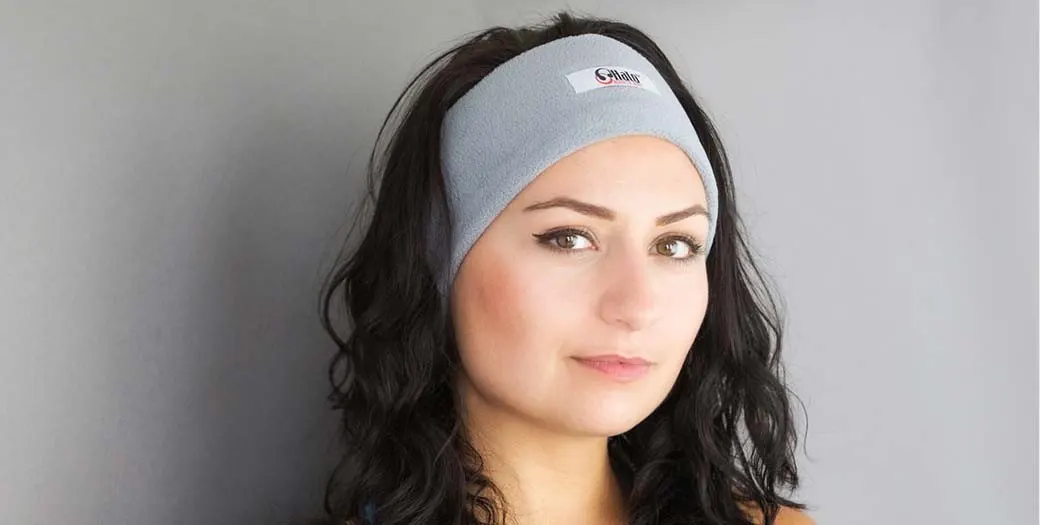
The CozyPhones solve one problem I’ve always had: falling asleep with earphones in. It’s just not comfortable to fall asleep, or wake up, with plastic stuck in your ears. CozyPhones are a soft fleece headband with thin, flat speakers inside. You take the speakers out when you wash the headband, or slide them around until they sit right on your ears.
Put on your favorite sleep playlist and you’ll be off to dreamland. The headband also doubles as a sleep mask: pull it over your eyes when you want pitch darkness. The built-in volume limit keeps sound under 90 dB.
The con: they’re wired, with a 3.5mm plug. Most phones don’t have a headphone jack anymore, so you’ll need an adapter, and the cable can wrap around you if you toss and turn.
Who it’s for: side sleepers on a budget, and anyone who hates having something inside their ears. Read our full CozyPhones post.
Hatch Restore 3 – a Sunrise Alarm That Replaces Your Phone on the Nightstand
The Hatch Restore 3 is a sunrise alarm clock, sound machine and reading light in one bedside lamp. At night it runs a wind-down routine with dimming light and sleep sounds. In the morning it slowly brightens like a sunrise before a gentle sound wakes you up.
The real trick is that you control it on the device itself, so your phone can stay in another room. The Quality Edit’s reviewer credits it with better sleep for exactly that reason. Hatch lists 80+ sleep sounds, and it comes in Putty, Greige and Cocoa.
The con: the full sound and meditation library needs a Hatch+ subscription after the included 30-day trial. The device works without it, but with fewer sounds. It also needs Wi-Fi to set up.
Who it’s for: people who hate their alarm, and anyone who scrolls in bed “just for a minute”.
If you’d rather have something cheaper and screen-free, our Gingko flip click alarm clock is a charming wooden alternative.
Snooz Original – a White Noise Machine With a Real Fan
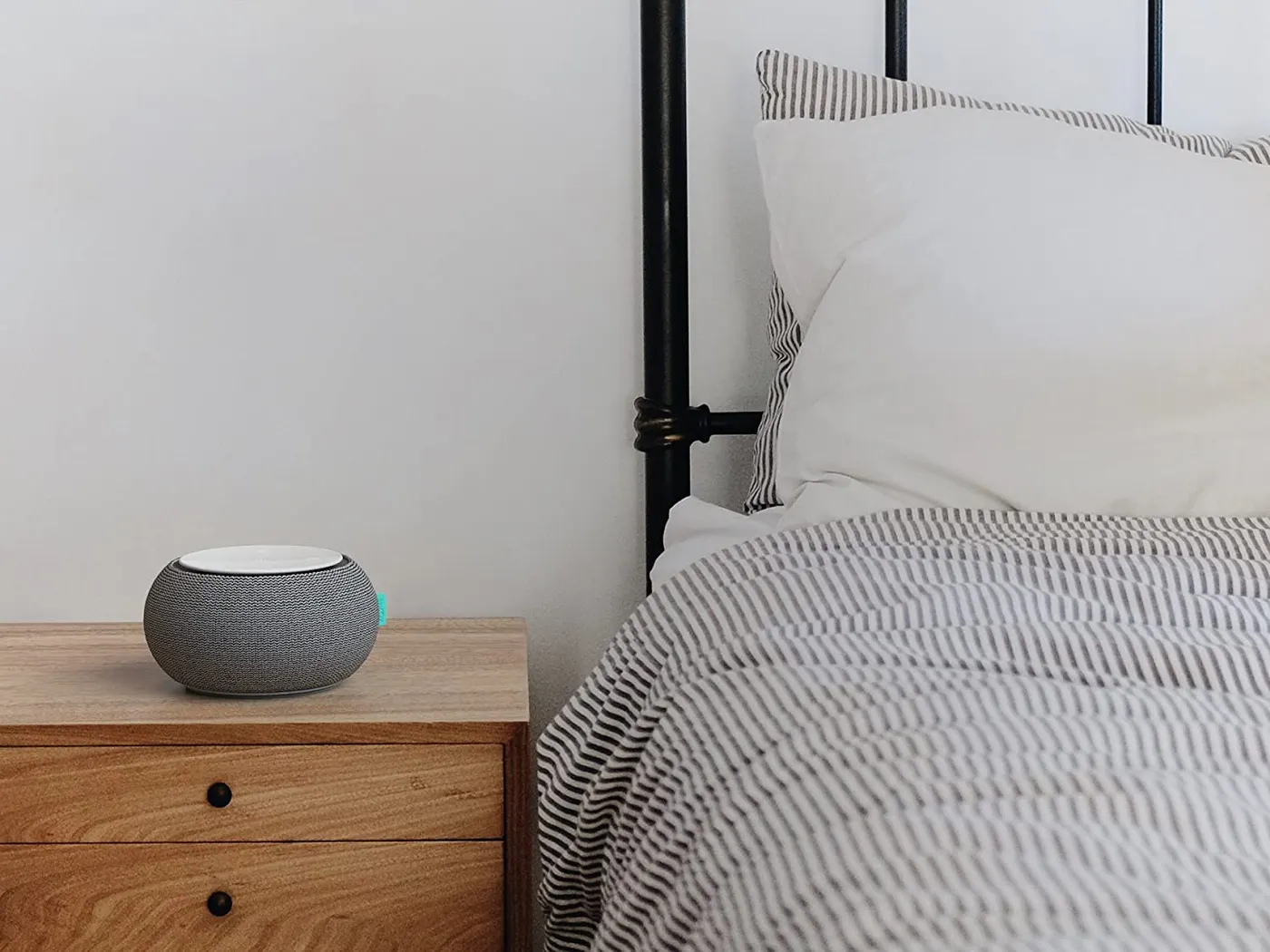
I didn’t know white noise machines existed until someone pointed out that running my box fan all night just to fall asleep was a bit of an electricity waste.
The Snooz has a real fan inside, so the sound never loops. You rotate the outer shell to change the tone from a light table fan to a deep airplane-cabin hum, and there are 10 volume levels. The free app adds scheduling with fade in and fade out, and Snooz says there are no subscriptions. It weighs about a pound, so it fits in a suitcase.
It drowns out a noisy hotel hallway or the neighbor’s barking dog, and it’s great for kids who are light sleepers.
The con: it only does fan noise. If you want rain, waves or a crackling fire, get the Hatch instead.
Who it’s for: fan sleepers, hotel sleepers and parents. There’s also a Snooz Pro with a travel case. More in our Snooz review.
Weighted Blankets – Gravity and YnM
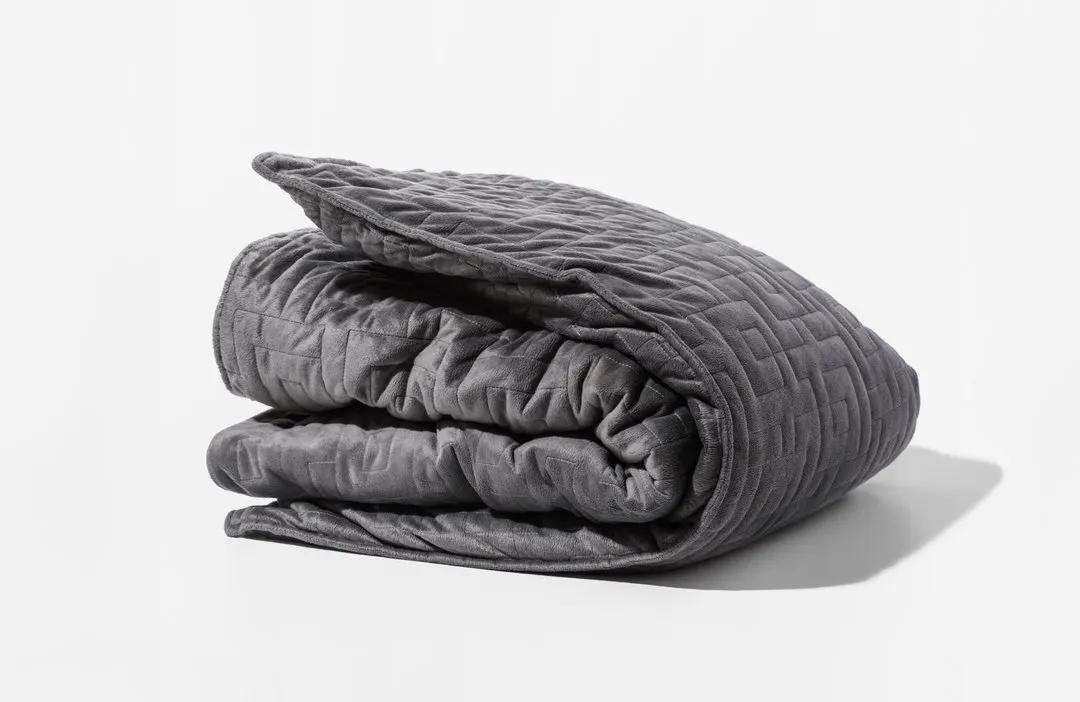
A weighted blanket is often recommended if you’re anxious or restless at night. The usual advice is around 10% of your body weight, which feels like being held. I don’t have bad insomnia, but I often get restless legs at night, and a weighted blanket does wonders to calm my body down. Less movement, deeper sleep.
Gravity Blanket is the premium pick. It raised nearly 5 million bucks on Kickstarter when it launched and is still the name people know. It has gridded stitching to keep the glass beads evenly spread and a soft, removable duvet cover you can machine wash. The inner blanket is hand wash only, though.
YnM is the budget pick if Gravity’s price makes you lose sleep. It comes in lots of sizes and weights, has glass beads in small pockets, and breathes well. The one we link is the 15-pound queen size (60 x 80 inches).
The con for both: they’re heavy (that’s the point) and warm. Hot sleepers should look at the cooling versions both brands sell.
Who it’s for: restless and anxious sleepers who like a good hug.
Dodow – a Metronome That Slows Your Breathing
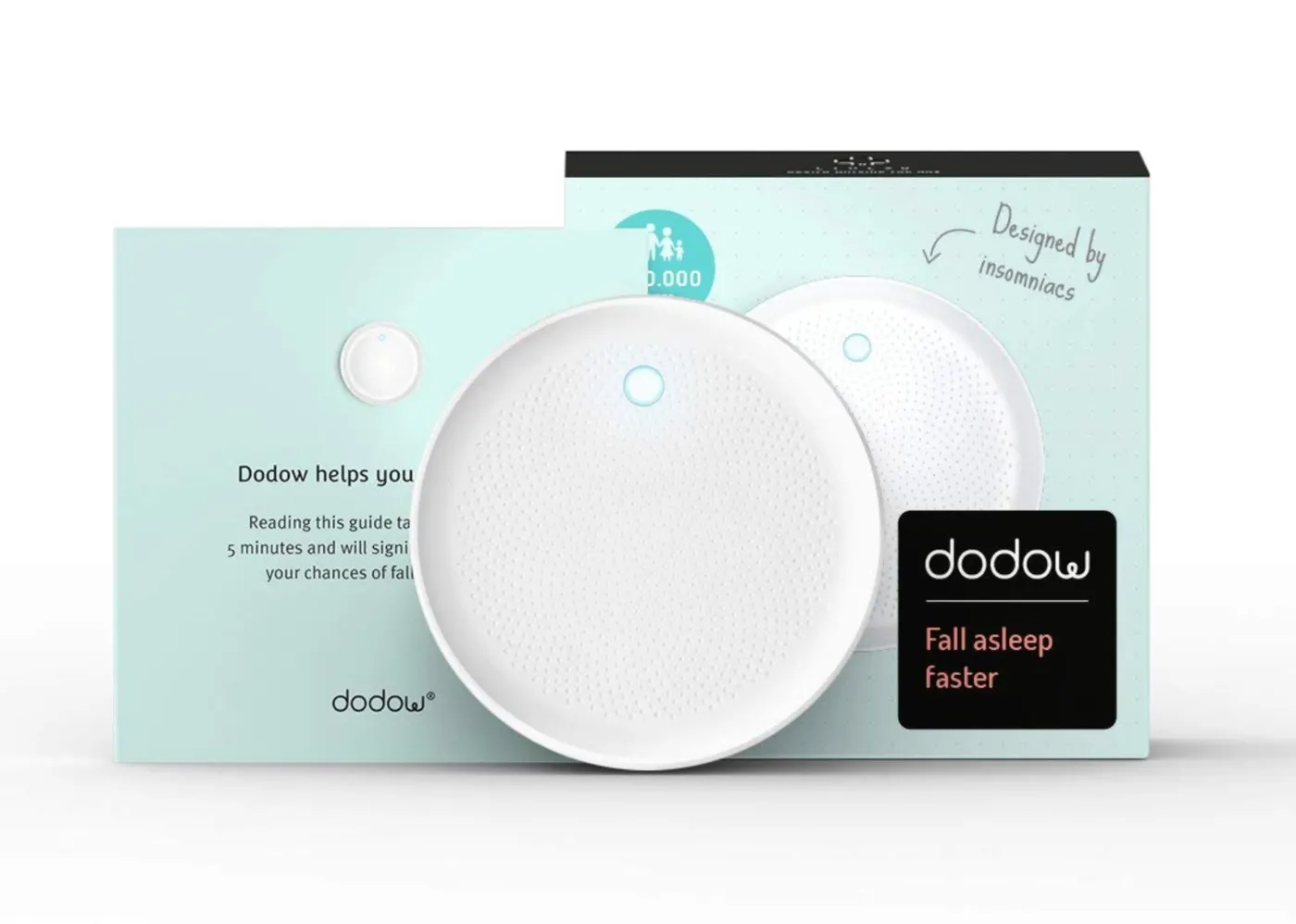
The Dodow is a small disc you put on your nightstand. Tap it, and it projects a soft blue halo on the ceiling that slowly grows and shrinks. You breathe in as it grows and out as it shrinks. Over 8 or 20 minutes, it slows your breathing from about 11 breaths a minute to about 6, and then switches itself off.
Following the light also keeps your mind busy, so it can’t replay that awkward thing from 2011. Livlab, the French company behind it, says slow breathing moves your body into a resting state.
The con: some people find it boring, which, to be fair, is the point. It runs on three AAA batteries, so keep spares around. The Amazon listing was unavailable when I checked, so we link to the maker’s shop.
Who it’s for: people whose brain won’t shut up at bedtime. Read our Dodow review.
Moonbird – a Breathing Coach You Hold in Your Hand
Moonbird does what Dodow does, but you hold it in your hand instead of watching the ceiling. The soft, pebble-shaped device expands and contracts, and you breathe along with it: in when it grows, out when it shrinks. No screen and no counting.
It also has a sensor that reads your pulse and heart rate variability, and Moonbird says it uses that to find your personal breathing pace. It works on its own, and the free app adds live biofeedback and links to Oura and Apple Health.
The con: it costs a lot more than the Dodow, and some coaching features need a premium subscription.
Who it’s for: anxious sleepers who like something to hold, and people who want to practice breathing during the day too.
Ostrich Pillow – the Best Sleep Gadget for Power Naps
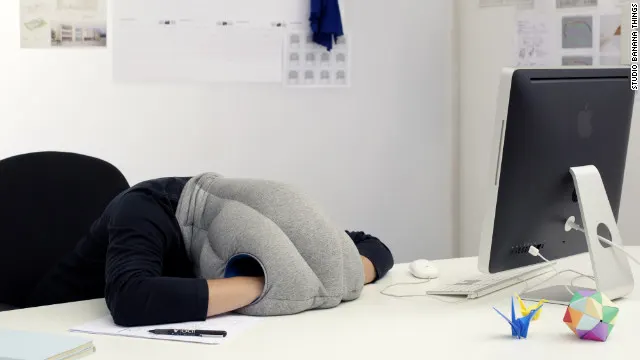
A post about sleep gadgets isn’t complete without the weirdest one of them all. The Ostrich Pillow is for the brave. You stick your head in it, tuck your hands into the side holes and doze off on your desk, on a plane or on a train. Once you get over looking like a sci-fi ostrich, there’s nothing cozier for a power nap.
The con: you will get stares. Many stares.
If that’s too much, the Ostrich Pillow Mini is a normal-looking small pillow you slide your arm into, so you can rest your head on it during a flight.
Who it’s for: frequent flyers and office nappers without shame.
How to Choose Sleep Aid Devices
- Find the problem first. Noise? Get earbuds or a white noise machine. Racing thoughts? Try Dodow or Moonbird. Hate mornings? Get a sunrise alarm.
- Side sleeper? Tiny earbuds (Ozlo) or a headband (CozyPhones) beat regular earbuds, which press into your ear.
- Watch for subscriptions. Hatch and Moonbird lock some content behind one. Soundcore and Snooz don’t.
- Get your phone out of the bedroom. Many of these gadgets exist so you can leave your phone somewhere else. Use them that way.
- See a doctor for chronic insomnia or loud snoring. Gadgets help with falling asleep, but they don’t treat sleep apnea.
FAQ
What happened to the Kokoon NightBuds?
They’ve been discontinued, and users report the companion app has stopped working. The Soundcore Sleep A30 and Ozlo Sleepbuds 2 are the best replacements.
Do blue light glasses help you sleep?
We used to recommend them, but a 2023 Cochrane review found the evidence for better sleep inconclusive. Putting the phone away works better and costs nothing.
Is there a trick to fall asleep faster without gadgets?
Try the “military method”: relax your face, drop your shoulders and arms, breathe out and relax your legs, then picture yourself lying in a canoe on a calm lake for ten seconds. If your thoughts wander, repeat “don’t think” to yourself.
Still awake? Our stress-relieving toys might help you wind down, or check out the Somnox sleep robot you cuddle to sleep. And if you want to track how you sleep, see our best health gadgets.